
Ana Dobrilovic
Updated Thu August 27, 2026
Published Under: Banking Cybersecurity Tips
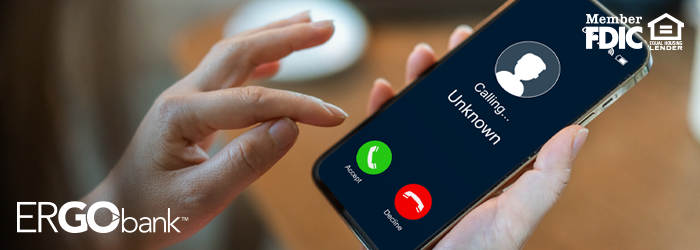
Most of us have gotten one: a text about a "locked account," a call warning of "suspicious activity," an urgent message that makes your stomach tighten for a second. Fall and the holiday season tend to bring more of these, since that's when scammers know we're busy, distracted, and shopping more than usual.
Spotting a fake doesn't take a fraud expert, though. It really comes down to knowing a handful of things your bank will never ask you to do. Once those rules stick, the fakes get a lot easier to catch, and you can pass the same simple list along to the people you care about.
Below are five things we'll never ask of you, plus a quick checklist for what to do when something feels off.
Quick answer: If you receive a suspicious call or text claiming to be from your bank, do not click links, share personal information, or provide security codes. Contact your bank directly using a trusted number.
In This Article
Why Impersonation Scams Work
Rule #1: We'll Never Ask for Your Full Card or Account Details
Rule #2: We'll Never Ask You to Share Security Codes
Rule #3: We'll Never Pressure You to Act Immediately
Rule #4: We'll Never Ask You to Move Money to "Protect It"
Rule #5: We'll Never Ask You to Click a Link to Verify Your Account
What to Do If You Receive a Suspicious Call or Text
When in Doubt, Reach out
Frequently Asked Questions
Why Impersonation Scams Work
Before the rules, it helps to understand why these scams fool smart, careful people every day. It rarely comes down to intelligence. Instead, scammers rely on a few simple tactics designed to get you to react before you have time to think.
- They create urgency. Scammers want you to act immediately because rushed decisions leave less time for questions.
- They look legitimate. Fraudsters can copy logos, spoof phone numbers, and create messages that appear authentic.
- They lean on trust. By pretending to be your bank, a delivery service, or a government agency, they borrow credibility before you've had a chance to verify who they are.
Rather than memorizing every scam tactic out there, focus on the things a real bank simply won't do. That's where these five rules come in.
Rule #1: We'll Never Ask for Your Full Card or Account Details
If we contact you, we will never ask for your full debit card number, PIN, full account number, or Social Security number.
A real bank already has your account information. Anyone asking you to read full account details over the phone or through text messages is displaying a major red flag, regardless of how convincing they sound.
Rule #2: We'll Never Ask You to Share Security Codes
One-time security codes sent to your phone or email are for your use only. We will never call, text, or email asking you to read those codes back to us.
This includes:
- Verification codes
- Authentication codes
- Password reset codes
A common scam occurs when a fraudster attempts to access your account, triggers a security code, and then contacts you pretending to be your bank. The moment you share that code, they gain access. If anyone asks for a code, the answer should always be no.
Remember: Security codes are like temporary passwords. Legitimate bank employees will never ask you to share them.
Rule #3: We'll Never Pressure You to Act Immediately
Real help doesn't come with a countdown clock. We will never tell you that you have just a few minutes to act before your account is closed, frozen, or compromised.
Watch for phrases like:
- "Your account will be closed today unless you verify now."
- "You only have a few minutes to respond."
- "Don't hang up or your funds will be frozen."
If a message is pressuring you to move faster than feels comfortable, that pressure itself is often the warning sign. Slow down, hang up, and contact us directly using a trusted phone number.
Rule #4: We'll Never Ask You to Move Money to "Protect It"
This is one of the most costly scams circulating today. We will never ask you to transfer money to a "safe account" or send funds somewhere else to protect your money.
Be especially cautious if someone asks you to:
- Wire money to another account
- Buy gift cards and provide the numbers
- Send money through a payment app to "verify" your account
No legitimate bank or government agency will ask you to do these things. If someone does, it's a scam.
Rule #5: We'll Never Ask You to Click a Link to Verify Your Account
One of the most common scams starts with a text message telling you to click a link and verify your account. We will never send you a link asking you to enter login credentials or personal information to keep your account active.
If you receive a message like this, don't click the link. Instead, visit our website directly, open your official banking app, or call the number on the back of your card. Going directly to a trusted source helps ensure you're talking to the real bank and not a fake website.
Think a Message Might Be Fake?
Don't guess. Reach out and we'll help you verify whether it came from us.
What to Do If You Receive a Suspicious Call or Text
When something feels off, follow these four simple steps:
- Stop. Take a breath and give yourself permission to slow down. Urgency is the trap, so pausing is your best first move. You are never obligated to respond in the moment.
- Don't click. Don't tap any links, download any attachments, or call back the number a suspicious text provides. Links and callback numbers can lead straight to the scammer.
- Don't share information. Don't give out card numbers, PINs, passwords, security codes, or personal details, no matter how official the request sounds. When in doubt, share nothing.
- Contact us directly. Reach out using a number you trust, like the one on the back of your card or on our website. We're always happy to confirm whether a message really came from us.
Simple rule: If a message makes you feel rushed, pressured, or scared, pause before taking any action.
When in Doubt, Reach Out
Remember that you can always check with us first. There's no such thing as a silly question when it comes to protecting your money, and you'll never bother us by calling to ask, "Hey, is this really you?"
We would much rather take a two-minute call to confirm a message than see one of our neighbors lose a dollar to a scam. So if anything ever feels off — a call, a text, an email, a gut feeling you can't quite place — give us a call or stop by. We're right here in the community with you, and we're always glad to help.
And if this list would help someone you love, share it. A quick forward to a family member could be the thing that stops a scam before it starts.
Questions About a Suspicious Message?
Our team is happy to help you verify whether a call, email, or text actually came from us.
Frequently Asked Questions
How can I tell if a bank text is real?
A legitimate bank text won't ask for security codes, passwords, or PINs, and it won't pressure you to click a link immediately. If you're unsure, contact your bank directly using a trusted phone number.
Will a bank ever ask for my PIN?
No. A legitimate bank will never ask for your PIN by phone, text, or email.
What should I do if I clicked a suspicious link?
Stop using the page immediately, avoid entering additional information, change your banking password if necessary, and contact your bank as soon as possible.
What information should never be shared over text?
Never share your PIN, passwords, security codes, Social Security number, or full account information through text messages.
How do banks typically verify identity?
When you contact the bank, you may be asked security questions to confirm your identity. However, banks do not ask customers to provide security codes or full account details during unsolicited calls.
Who should I contact if I think a scammer contacted me?
Contact your bank directly using a trusted phone number. If money was lost, you may also report the incident to the Federal Trade Commission.